
Dylan Field

BUSINESS ASSOCIATION
Figma
Explore Figma: company profileDylan Field is the co-founder and chief executive of Figma, the collaborative design-software company he started with Evan Wallace after leaving Brown University through the Thiel Fellowship.
An early interest in performance and mathematics
Dylan Field's background, as recounted in Figma's own founder history, combines childhood acting with an early interest in mathematics. The company describes him growing up in Sonoma County, California, and later becoming increasingly engaged with mathematical ideas. These details give a broader picture of the person who would help build a design-software business, rather than presenting the company as the only interest he had ever pursued.
The history also points to the importance of people who encouraged that curiosity. Field's account includes a school employee who introduced him to more advanced mathematical thinking. The relevance is the development of an interest that continued beyond a prescribed classroom task. His later work would similarly connect technical possibilities with a question about how people could use them, combining curiosity about a tool with attention to an experience.
Sources [1]
Brown University and the partnership with Evan Wallace
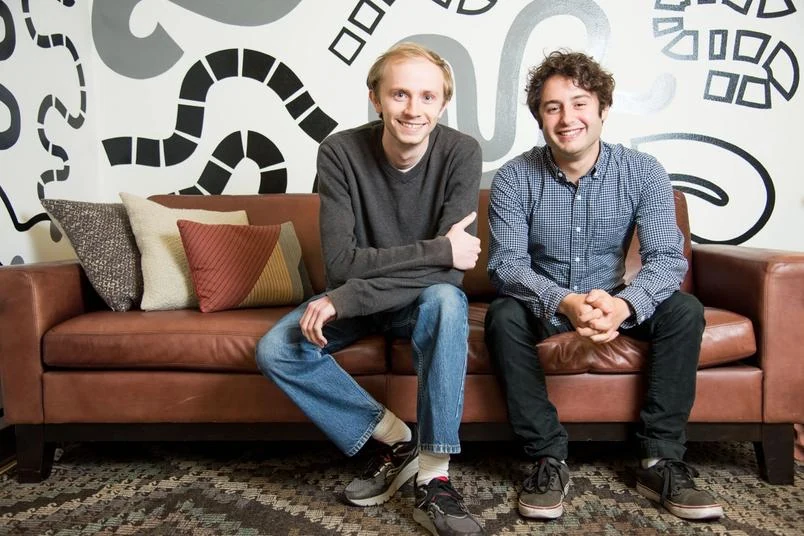
Field met Evan Wallace at Brown University, and the two began exploring the ideas that became Figma. Field subsequently left university through the Thiel Fellowship to develop the company. The partnership is central to the history because it connects product ambition with substantial technical work. Figma's own accounts consistently identify both men as co-founders rather than reducing the beginning to one person's public profile.
Their early work concerned what increasingly capable web technology might allow people to do. A browser had become a more powerful place to run graphics-intensive software, opening possibilities that previously depended on installed applications. The commercial question was which useful activity should be built around that capability. Field's later account includes experiments and uncertain directions before the pair settled on the product associated with the company today.
Making design software work through the internet
Figma's early public explanation presents design as work that should benefit from the internet. A tool accessible through a browser changes how a file can be reached and how people can join a conversation around it. The product proposition therefore concerned more than reproducing an existing application in another location. It involved the experience of making and sharing work with other people.
That change is easiest to understand through a design process. A person creates something, another person needs to see it and a team needs a way to discuss or develop it further. If those actions can happen within a shared environment, the software becomes part of the collaboration rather than only the place where the original drawing was made. Field's company developed around that relationship between a tool and the people using it together.
Collaboration became part of the product identity
Figma's founder history describes the importance of its collaborative development. Shared work became a recognizable part of the product rather than a secondary feature added only after a design was finished. That choice helps explain the company's appeal beyond the person making the initial interface. A product manager, developer or other colleague can participate in understanding what is being created.
The entrepreneurial insight lies in treating design as part of a wider process of building a product. A file has value because people can use it to make decisions and carry work forward. The software's role extends through that process, creating reasons for several people within an organization to encounter the same environment. This is a concrete product strategy, separate from a general claim that collaboration is automatically useful in every circumstance.
Learning to lead while the company developed
Field has discussed the challenge of becoming a chief executive while still learning how to run an organization. Figma's account of his interview with Guy Raz describes early growing pains and the need to move beyond trying to control every detail personally. The story gives the founder role an organizational dimension alongside the more familiar account of choosing a product idea and developing technology.
A company needs decisions to be made across different kinds of work, often by people with more detailed knowledge of a particular area than the founder. The challenge is to preserve a coherent direction while allowing that expertise to function. Field's retrospective account makes the learning process visible, providing context for how the business could grow beyond the original partnership without treating leadership as a skill that appeared fully formed at the beginning.
A platform spanning more stages of creation
Figma's current public materials describe a broader platform than a single initial design tool. The range includes activities around collaborative planning, design, development and newer AI-supported work. This expansion follows the same central question about how people move from an idea toward something that can be built and used. Different products address different parts of that journey within a connected environment.
For the company, adding an offer also introduces a question of coherence. A wider catalogue needs to make sense to an existing customer without losing the clarity that made the original product useful. Field's public discussions about design and technology place judgment and the quality of the finished experience near the centre of that work. The tools change, while the intended relationship between people making a product remains recognizable.
The public-company milestone in 2025
Figma's July 2025 founder letter marked its initial public offering. The company had begun in 2012, and the letter connected the public-market milestone with a longer history of making design more accessible and collaborative. This supplies a clear institutional development in Field's career, moving the business into a setting with public shareholders and continuing reporting requirements.
An IPO is a financing and ownership milestone, not a complete measure of the usefulness of a product. For the founder profile, its importance is that the company has a public corporate record in addition to an influential software identity. Field's leadership can be read through both: the product's development explains why customers use it, while the public-company chapter introduces a different set of responsibilities around the organization that supplies it.
Sources [5]
A founder whose public work returns to design judgment
Field's interviews and writing frequently concern the role of design as technical tools become more capable. The subject is commercially relevant to Figma because easier production does not remove the need to decide what should be made or how it should work for another person. A tool can accelerate a task while leaving important choices about purpose, clarity and quality with the people using it.
That perspective connects the company's technical beginnings with its present range. Browser graphics created an opening for a new kind of application; collaborative work gave it a use; continuing changes in technology create further possibilities. Field's role involves deciding how those possibilities fit a product that teams can understand and depend upon. It is a company-building problem as well as a debate about the future of creative work.
In his IPO letter, Field also describes a balance between making design accessible and retaining the power that professional teams need. That is a concrete product tension as the audience broadens.
An enduring partnership between a tool and its users
Field's entrepreneurial story is centred on one identifiable company, but includes several kinds of development: a technical partnership, the search for a useful product, the growth of an organization and a move into public markets. Figma provides the concrete company file for that account. Its own history makes both the co-founding relationship with Wallace and the later leadership work visible.
The thread connecting those stages is the idea that design happens among people building something together. That proposition gave the internet a practical role within the product, rather than treating it only as a way to distribute software. Field's public identity and Figma's operating history therefore reinforce one another, showing a founder whose work links a technical possibility with a sustained effort to make collaborative creation easier.
The evidence behind the account
Sources & further reading
The linked source material was checked on October 17, 2026. Company and creator descriptions are first-party accounts. Roles and business relationships may change. Source numbers refer to the sections above.
- figma.com7 Moments That Shaped Figma, as Told by Dylan Field | Figma Blog
- figma.comDesign Meet the Internet | Figma | Figma Blog
- figma.comDylan Field and Garry Tan on design, AI, and the power of “locking in” | Figma Blog
- figma.comFigma: The collaborative canvas for design, code, and AI
- figma.comFigma’s IPO: Design Is Everyone’s Business | Figma Blog
IN PICTURES THE PHOTO ARCHIVE
More of Dylan Field.
8 photographs
A closer look, beyond the biography.






CONNECTED BY FIELD
Other people.
Shared territory.

Technology
Ali Abdaal
Voicepal
From Cambridge medical student to a publishing and software business, Ali Abdaal has built a career around making learning and creative work more approachable.
Technology
Anne Boden
Starling Bank
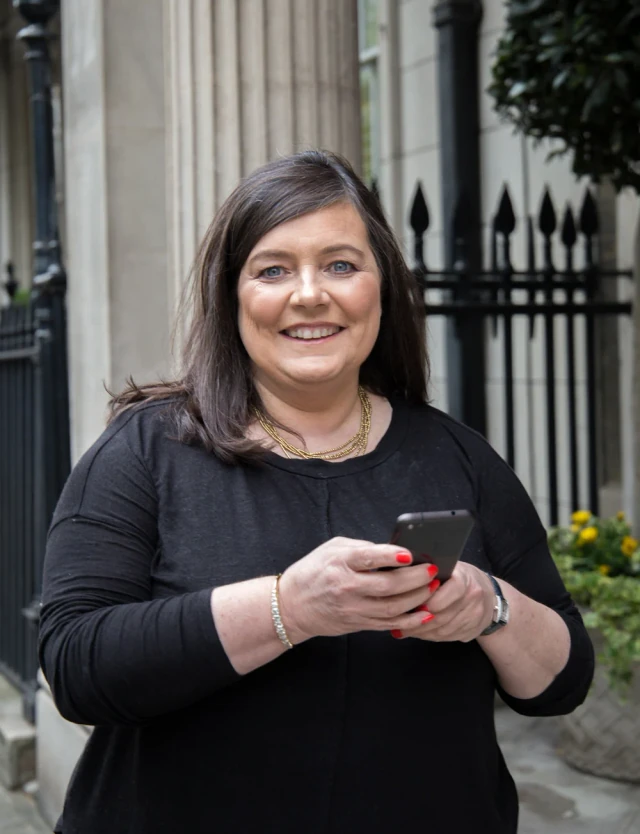
Anne Boden's founder story connects computing, banking operations and the creation of Starling, followed by a transition from its founding chief executive role.

Digital Business
Brian Chesky
Airbnb
Brian Chesky brought a design background into the development of Airbnb, from its first guests in San Francisco to a wider accommodation marketplace.