
Pieter Levels
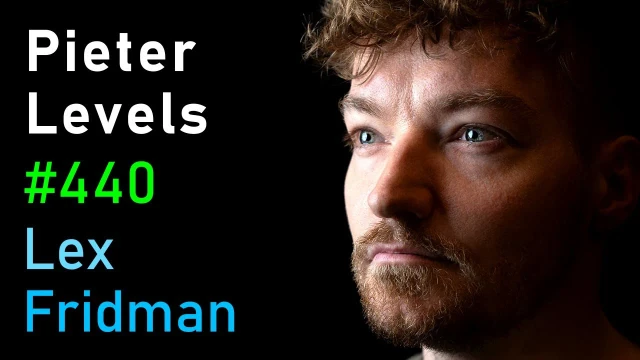
BUSINESS ASSOCIATION
Photo AI
Explore Photo AI: company profilePieter Levels is a Dutch software entrepreneur known as levelsio, whose independently built products include Photo AI, Remote OK and the community and travel-information business now called Nomads.com.
A public commitment to building and releasing
Pieter Levels became known among independent software builders through a public commitment to developing a series of small projects. His own writing describes a plan to create twelve projects over twelve months, giving the work a timetable that required repeated decisions about what to release. The point of the constraint was practical: an unfinished idea could not remain indefinitely protected from the response of potential users.
That approach is central to his public identity as levelsio. A project begins with a problem or an observation, then becomes something another person can try. The resulting response may justify further work or show that the idea should change. His retrospective account treats this as a process of experimentation, rather than evidence that all projects became enduring companies. The list of things he has built includes both continuing businesses and smaller experiments.
Making products around a mobile working life
Several of Levels's better-known projects concern people working through the internet. Nomad List, now presented in his project archive as Nomads.com, developed around information and community for people interested in living and working in different places. Remote OK focuses on remote employment. These businesses are related through an audience, but they solve different problems: deciding where to live and discovering an employment opportunity are not the same task.
The connection helps explain his interest in building for a group whose needs he could observe directly. A relatively specific audience can provide a clearer starting point than an abstract ambition to serve everyone. A useful comparison, directory or matching function can become a product if people return to it for a reason. The continuing challenge is to keep the underlying information and experience useful after the initial attention of a launch.
Levels's public projects archive also gives readers a way to follow the range of his work rather than relying only on the latest launch. A remote-work job board, a community concerned with living in different places and an image-generation product address different customer tasks. Their connection is the founder's practice of building and operating online services. The variety is useful context for Photo AI because it shows experience with publishing a product, presenting its purpose and dealing with users across several categories. It also keeps the biography grounded in identifiable projects rather than an abstract account of internet entrepreneurship.
Bootstrapping as an operating choice
Levels's published account emphasizes building without relying on an initial venture-capital round. Photo AI's founder page describes the business as independently owned and without investors. This is relevant to the way he discusses products: finding paying customers and keeping operating demands manageable matter from an early stage. It is a particular way to organize ownership and development, not a universal judgment about how every technology company should be financed.
A small ownership structure also does not mean that the underlying service exists without external dependencies. Hosting, payments, model providers and other technical services can support a product even when a founder does not maintain a large employee organization. The meaningful question is which responsibilities remain with the operator. Customers still depend on the service working, on clear terms and on the founder's capacity to maintain it as the surrounding technology changes.
Moving from image experiments to Photo AI
Photo AI is the primary business association used for Levels in this collection. Its official founder page directly identifies him as the creator of the service. The product applies generative-image technology to making pictures of people and other visual content. His public project archive also lists related work, including Avatar AI and Interior AI, placing the application within a broader period of experimentation with generative software.
The product is most clearly described through the customer's workflow. A user supplies material or defines a character, then requests images or video in a chosen setting or style. This is different from arranging a conventional photographic session. The resulting content is generated, even when it resembles a real camera image. Keeping that distinction visible is necessary to describe what the business sells and what its examples demonstrate.
The workflow inside an AI image product
Photo AI's public site describes creating an AI representation from uploaded images and generating further content with that representation. It organizes many options into packs and tools intended to make the request more specific. Those features address a product-design problem: a powerful model is not automatically easy for a customer to use. The application needs to translate a person's intention into a sequence they can understand and repeat.
The company's examples and performance descriptions remain its own demonstrations. A realistic-looking generated image is not evidence that the depicted event occurred or that the person was photographed in that location. This distinction is especially relevant to a service that creates personal imagery. The business opportunity lies in arranging access to a useful generative workflow, while the customer still needs to review the output and understand what kind of content they are using.
Sources [3]
Public communication as part of distribution
Levels has made discussing projects in public part of his working method. His blog and project archive show a long sequence of ideas, experiments and products, while his levelsio identity connects those activities across social media. Public development can make a small product visible before a conventional marketing organization exists. It can also supply feedback from people interested enough to try what is being built.
Visibility introduces a different kind of work alongside coding. An audience needs to understand the problem, the offer and the reason to return. The personal account helps introduce those subjects, but the product has to remain useful when the social post is no longer new. Levels's career is therefore not simply a story about publishing more frequently. It concerns the connection between an independently operated product and the channels through which appropriate customers discover it.
Keeping experiments distinct from enduring businesses
Levels's published project list is unusually broad, including software services, community projects and smaller creative experiments. The variety is informative because it shows the difference between making something and committing to operate it over time. A prototype can answer a question quickly. A continuing business has customers, costs, support needs and a reason for the operator to keep maintaining it after the initial experiment has done its job.
The same distinction is useful when reading public revenue discussions. A number from a particular period does not automatically describe profit, personal wealth or the future of a business. This profile does not assign a private valuation to his portfolio. The clearer, verifiable account is that Levels has built identifiable products with their own users and public interfaces, and that Photo AI explicitly identifies him as its founder.
An independent maker with a recognizable portfolio
The recurring pattern in Levels's career is a willingness to make a narrowly defined product available and learn from how people use it. Remote employment, nomadic living and generated imagery are different markets, but each provides an example of translating a recognizable task into a digital service. The technical tools have changed over time; the interest in releasing something a customer can use remains visible.
His place in this collection rests on that operating record as well as his online following. Photo AI supplies a concrete company file, while the project archive provides a wider account of his work. The combination makes him a relevant bridge between software entrepreneurship and creator-led distribution. It also shows why a popular personal account is only part of the story: the services behind it must continue doing a useful job after an audience has moved on to another conversation.
The evidence behind the account
Sources & further reading
The linked source material was checked on October 17, 2026. Company and creator descriptions are first-party accounts. Roles and business relationships may change. Source numbers refer to the sections above.
- levels.ioBootstrapping side projects into profitable startups - @levelsio (Pieter Levels)
- photoai.comWho created Photo AI? Meet Pieter Levels, the Founder
- photoai.comAI Video Generator & Image Generator by Photo AI
- levels.ioList of all my projects ever - @levelsio (Pieter Levels)
IN PICTURES THE PHOTO ARCHIVE
More of Pieter Levels.
8 photographs
A closer look, beyond the biography.



CONNECTED BY FIELD
Other people.
Shared territory.
Technology
Ali Abdaal
Voicepal
From Cambridge medical student to a publishing and software business, Ali Abdaal has built a career around making learning and creative work more approachable.

Technology
Anne Boden
Starling Bank
Anne Boden's founder story connects computing, banking operations and the creation of Starling, followed by a transition from its founding chief executive role.

Digital Business
Brian Chesky
Airbnb
Brian Chesky brought a design background into the development of Airbnb, from its first guests in San Francisco to a wider accommodation marketplace.