
Melanie Perkins

BUSINESS ASSOCIATION
Canva
Explore Canva: company profileCanva's co-founder and chief executive whose work to simplify design began with teaching software and developing a focused yearbook business.
Recognizing an opportunity to simplify design
Melanie Perkins is Canva's co-founder and chief executive. Cameron Adams' account places an early insight in 2007, when she helped classmates use InDesign and Photoshop at university. Seeing the effort required before they could create anything led her to consider whether the software experience itself could become easier.
She envisioned a platform that could be used without a substantial technical education or budget. Accessible visual communication became the larger ambition, while the first company developed around the idea served a much narrower customer group. That focused beginning gave the founders a practical place to explore the relationship between design tools and the people using them.
Using school yearbooks to develop a working business
Perkins and Cliff Obrecht created Fusion Books to help schools design and print yearbooks. Her retrospective describes supporting teachers who managed those projects alongside classroom responsibilities. This specific market offered experience with customer needs, software development and the daily work of running an operating company.
She describes a bootstrapped approach supported by a research-and-development tax concession and a small-business bank loan. Fusion Books provided a working foundation for the broader design platform they hoped to create. It connected their ambition with a product people used and a business the founders could learn to develop.
The yearbook setting connected a design tool with a completed physical outcome for a school. Teachers needed to move a project through design and printing alongside their other work. That clear use case helped give the founders a practical environment for understanding the product they supplied.
Sources [2]
Assembling a team with complementary experience
Building a general design platform required a wider set of collaborators. Perkins recounts introductions to investor Bill Tai and Google Maps co-creator Lars Rasmussen during the search for technical partners. Rasmussen introduced her and Obrecht to Cameron Adams, whose background brought together software development and design.
Adams recalls hearing the vision while the pair were still operating Fusion Books, and his involvement added another co-founder. The relationships and complementary skills developed over time. This places collaboration within Canva's origins, showing how an initial observation about software became the basis for a company assembled through people with different capabilities.
Connecting a growing team with a shared direction
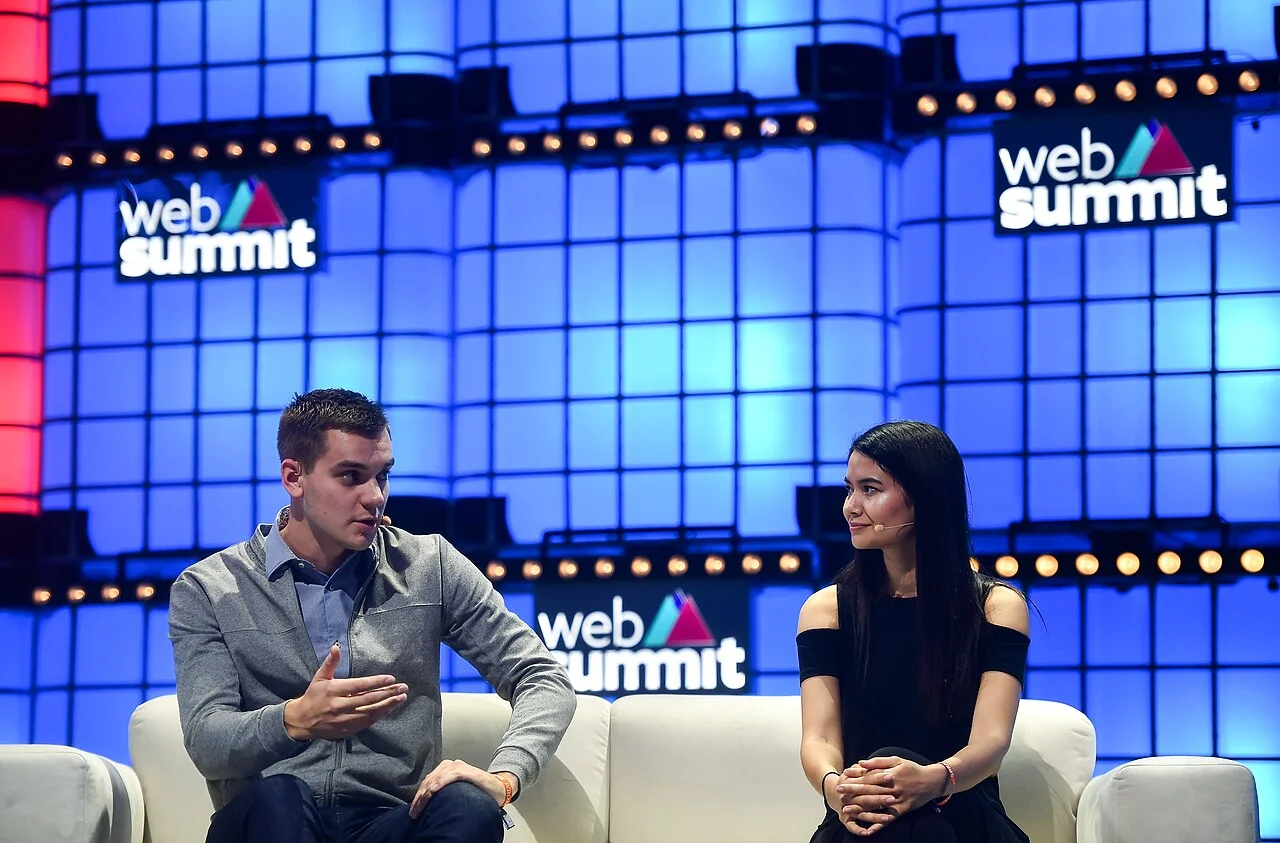
In her tenth-anniversary account, Perkins describes company building as continuing work on products, people and problems. She recognizes the team, community, investors and culture supporting the mission. Flexible arrangements, asynchronous communication and shared materials appear among the ways the company includes colleagues working across time zones.
She also presents a two-step ambition: develop a valuable company and use that position to do good. This expresses the founders' stated purpose rather than measuring every outcome. Her chief-executive responsibilities connect that direction with the expanding product and the organization working to support its development.
Learning to communicate a broader product vision
Perkins' early retrospective describes explaining Canva's idea to potential investors and collaborators. Fusion Books could demonstrate a working product, while the intended platform had a wider audience and scope. The founders needed to communicate both the difficulty users faced and the different experience they wanted to make available.
Bringing people into the undertaking required more than recognizing a customer's frustration. It involved connecting that observation with an understandable account of the proposed solution. Her history includes revisions, conversations and introductions, making the development of the company's message another part of her entrepreneurial learning.
Sources [2]
Making accessibility work across languages and markets
Canva's localization history appears in Perkins' tenth-anniversary account as a sequence of adaptations. Spanish arrived in 2016, followed by expansion to 100 languages in 2017. Later work supported right-to-left languages including Arabic and Hebrew, with local currencies, payment options and templates also forming part of the development.
These changes give the global design ambition a practical form. Menus, text direction, payment habits and visual material all contribute to how a user encounters a product. Perkins' account shows accessibility developing through concrete decisions, connecting a broad mission with the details required to serve people in different settings.
Sources [3]
Investing in the foundations of collaboration
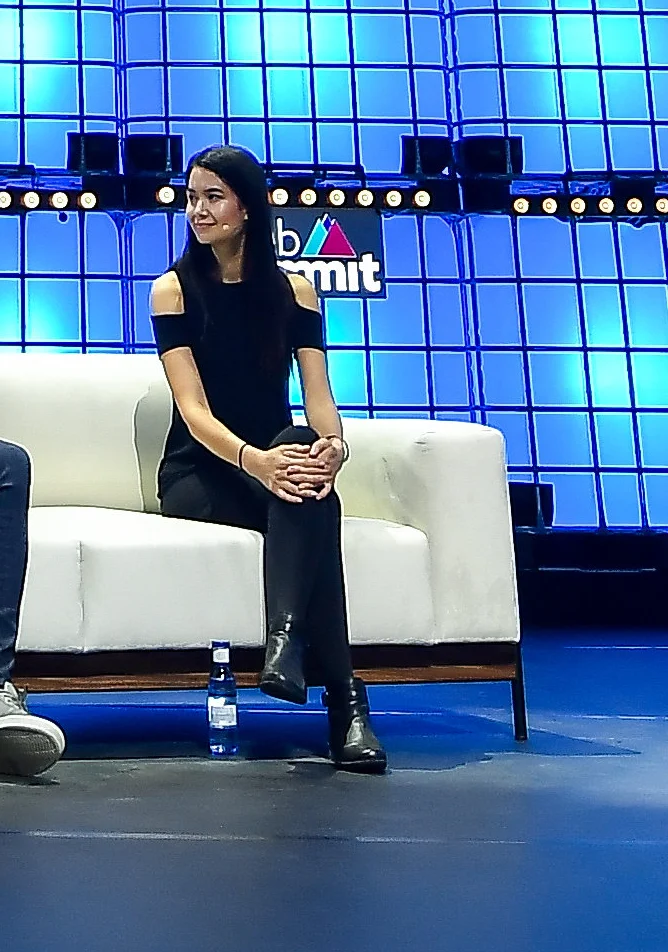
Perkins recalls a two-year rebuilding of Canva's front-end platform. This technical investment supported simultaneous collaboration, use across devices and more complex language requirements. Developing those capabilities required attention to the underlying system as well as the interface users encounter.
The account connects an accessible product with patient engineering and prioritization. Preparing technical foundations can create room for later capabilities, linking the work of the team with the opportunities available to customers. This development adds another concrete chapter to the company-building process described in her founder story.
Sources [3]
A few turning points
Career milestones
The yearbook business as a place to learn from customers
Fusion Books gave Perkins and Obrecht a specific customer before the broader design-platform ambition was realized. Teachers had a yearbook project to complete alongside their classroom work, making ease of use a practical concern rather than an abstract product goal. The software and printing offer needed to serve that situation. Perkins's retrospective connects the early business with understanding those needs and with the work of operating a company. This provides a concrete middle stage between noticing difficulty with design tools and assembling the wider team that would build Canva.
A working yearbook product also gave potential collaborators something more tangible than an idea alone. The founders could describe the larger vision while pointing to experience with actual customers and a defined project. Perkins's account makes the communication of that vision part of the journey. Introductions to Tai, Rasmussen and Adams then brought additional relationships into the undertaking. The founding story consequently includes both product learning and the search for people with complementary experience, giving the later company a clear professional and collaborative foundation.
Accessibility as continuing product and organizational work
Localization gives the accessibility ambition a particularly concrete form. A person needs more than translated words to use a design product comfortably. Text direction, local templates, payment options and currency can each affect the experience. Perkins's anniversary account names these areas within Canva's development, showing how a general design mission became a sequence of practical adaptations. The multilingual history therefore belongs to the company-building story as much as to the interface. It connects the audience the founders wanted to serve with the technical and operational work required to serve it.
The front-end rebuilding described in the same retrospective supplies another example of work beneath the visible product. Simultaneous collaboration and use across devices depend on capabilities that need to be developed within the platform. Perkins presents that investment as part of the longer company journey. The example makes patient technical work visible alongside the familiar founding idea. It shows the ongoing relationship between an accessible experience and the underlying system through which that experience is delivered.
The team arrangements mentioned in the retrospective add an organizational counterpart. Asynchronous communication and shared materials help colleagues work across time zones, connecting a global product with a distributed working environment. Perkins's biography therefore includes learning from a defined school customer, communicating a broader vision, finding collaborators and developing the product and team over time. The named accounts give those chapters detail while retaining her co-founder and chief executive association as the central professional thread.
Her two-step ambition also places the commercial undertaking within a wider stated purpose. The account presents company value and positive impact as related parts of the long-term vision. This belongs to Perkins's own explanation of the direction she wants the organization to follow, providing a first-person perspective alongside the documented product developments.
The yearbook business remains a useful reference throughout this development, because it shows the original accessibility question being addressed for an identifiable customer and project.
The evidence behind the account
Sources & further reading
The linked source material was checked on October 13, 2026. Roles and business relationships may change. Source numbers refer to the sections above.
- CanvaCanva co-founder Cameron Adams' biggest lessons
- Canva21 Questions from Aussie Startups: Part one
- Canva21 Questions from Canva's 10-year journey: Part two
- CanvaMelanie Perkins: author biography
IN PICTURES THE PHOTO ARCHIVE
More of Melanie Perkins.
6 photographs
A closer look, beyond the biography.






.jpg)
.jpg)
.jpg)
.jpg)
.jpg)
.jpg)
.jpg)
.jpg)
CONNECTED BY FIELD
Other people.
Shared territory.

Technology
Ali Abdaal
Voicepal
From Cambridge medical student to a publishing and software business, Ali Abdaal has built a career around making learning and creative work more approachable.

Technology
Anne Boden
Starling Bank
Anne Boden's founder story connects computing, banking operations and the creation of Starling, followed by a transition from its founding chief executive role.

Digital Business
Brian Chesky
Airbnb
Brian Chesky brought a design background into the development of Airbnb, from its first guests in San Francisco to a wider accommodation marketplace.