
Jensen Huang
BUSINESS ASSOCIATION
NVIDIA
Explore NVIDIA: company profileAn electrical engineer and NVIDIA co-founder whose leadership connects the company's graphics background with software tools and a wider accelerated-computing platform.
Building technical foundations before founding NVIDIA
Jensen Huang earned his bachelor's degree in electrical engineering at Oregon State University in 1984 and a master's degree in the same field at Stanford in 1992. Work at Advanced Micro Devices and LSI Logic placed him within the semiconductor industry before he established his own company, connecting his education with practical industry experience.
This background matters to a business in which hardware, software and manufacturing are closely related. Oregon State's career account also connects his studies with later support for the university. Huang's entrepreneurial story begins with technical training and work in the industry, providing foundations for the computing architecture that became central to NVIDIA's development.
Extending parallel computing beyond graphics
Huang co-founded NVIDIA in 1993 with Chris Malachowsky and Curtis Priem and has served as president and chief executive since its founding. Computer graphics provided its original focus, with many calculations performed in parallel. The company's corporate history highlights the 1999 introduction of its GPU among the milestones in developing that approach.
CUDA followed in 2006, providing a software platform through which NVIDIA graphics processors could be used for other computing tasks. Processor architecture and programming tools developed together, helping broaden the company's applications. This longer chronology provides context for its later artificial-intelligence work, connecting new workloads with technical foundations established over time.
Leading a platform for different computing needs
NVIDIA's leadership biography describes a focus on accelerated computing and artificial intelligence. Scientific computing, machine learning and graphics are among the applications for its products and software. Huang leads an organization serving customers who need computing performance together with an environment in which developers can put that performance to use.
Expansion has grown around continuity in parallel computing. Research workloads, graphics and artificial intelligence have different requirements, while drawing on related architectural ideas. This relationship gives his career a clear technical thread: developing the processors, tools and organizational work through which an existing approach can serve a broader range of users and applications.
A wider computing platform needs more than a single component. Hardware provides capability, while software and development tools help people apply it to specific work. The history described by NVIDIA connects those contributions across several milestones. This gives Huang's leadership a continuing technical setting in which the original graphics expertise develops alongside the practical requirements of scientists, programmers and other users of the architecture.
Developing hardware alongside programming tools
NVIDIA's timeline places the GeForce 256 in 1999 and CUDA in 2006. These milestones connect a graphics processor with tools that let programmers use parallel computing for additional tasks. As developers gained more ways to work with the architecture, its practical range extended beyond the original display-related setting.
The sequence links hardware development with a software ecosystem. A processor needs usable tools and applications as well as technical capability. Developer participation helped expand the purposes for which the hardware could be used, forming part of NVIDIA's progression into a wider computing business under Huang's leadership.
Sources [3]
A specific research step toward deep learning
The company's corporate timeline identifies AlexNet's 2012 ImageNet competition result as a significant GPU and deep-learning milestone. Researchers used GPU computing to train a neural network, demonstrating an application extending beyond the technology's original graphics association. This provides a named research episode within the longer development of its AI role.
The result involved model and software development by researchers alongside the hardware available to them. It shows how an established computing approach can become useful for a new workload through collaboration across different technical contributions. This research context makes the company's progression easier to understand as a sequence of developments rather than a single product moment.
Sources [3]
Maintaining a relationship with engineering education
Stanford's account links Huang's graduate education with an ongoing connection to the university, including the Jen-Hsun Huang Engineering Center. This academic association gives his biography an institutional setting alongside the semiconductor and company leadership work that developed from his electrical-engineering background.
Education creates an environment in which later engineers can prepare for a range of technical problems. Huang's university relationships connect his own training with support for that learning environment. They form a separate strand from NVIDIA's commercial research and product work, while retaining the engineering interests that run throughout his career.
Sources [4]
A few turning points
Career milestones
The combination of engineering education and industry experience
Huang's educational and professional beginnings place the founding of NVIDIA within a defined technical field. Electrical-engineering study at Oregon State and Stanford preceded work in the semiconductor industry. The company was therefore established after experience with the environment in which its products would be developed. The university accounts add an institutional perspective to the corporate biography, connecting the individual with the education behind the later leadership role. This sequence gives the entrepreneurial story a foundation in technical formation and industry work before the organization associated with his name came into existence.
The founding partnership with Chris Malachowsky and Curtis Priem is another concrete part of that beginning. Naming the co-founders places collaboration within a company often publicly identified with one visible leader. NVIDIA's subsequent development depended on products and teams within the organization, while Huang's long executive association supplies continuity in the biography. The company source records that relationship and the technical direction it presents. The profile can therefore follow an individual career while retaining the partnership and organizational setting in which the products were created.
Why the programming environment mattered alongside the processor
A processor's capabilities become useful to a developer through ways of expressing work for it to carry out. NVIDIA's history places CUDA alongside its graphics-hardware milestones, making the software environment part of the technical story. The relationship helps explain the move beyond graphics: parallel computing can address additional tasks when programmers have tools with which to use the architecture. Huang's biography consequently connects semiconductor products with a wider platform, rather than presenting the company's development only as a succession of physical devices.
The AlexNet milestone makes the later research application specific. The corporate timeline identifies a named competition result and the use of GPU computing in training a neural network. Researchers and their work belong within that account, alongside the technology supplying the computing capability. This gives the AI chapter a concrete point of reference. It connects the earlier graphics and programming milestones with an application in another field, illustrating the broader range of work that could be carried out using the architecture described in the company history.
The engineering-center association at Stanford adds another setting alongside the commercial technology. It links Huang's academic background with a continuing institutional relationship and a place connected to future engineering work. Read with the corporate and university biographies, this provides a fuller professional sequence: education, semiconductor experience, a founding partnership, a long executive role and a wider academic association. The source record gives each chapter an identifiable institution through which readers can follow the development in more detail.
Across these chapters, the recurring subject is making computing capabilities available for practical work. Graphics provided an early application; programming tools broadened what developers could express; later research demonstrated another use. Huang's leadership association connects those milestones within the history of the company he helped establish.
The technical milestones also concern different participants. A graphics user encounters an application, a programmer uses an environment for expressing work, and a researcher applies computing resources to a particular problem. NVIDIA's history connects those audiences through the products and tools it developed. Huang's biography follows that widening range of use alongside the educational and professional foundations described by the university accounts.
The applications differ.
The evidence behind the account
Sources & further reading
The linked source material was checked on October 13, 2026. Roles and business relationships may change. Source numbers refer to the sections above.
- Oregon State UniversityDoing important, hard work you love
- NVIDIAJensen Huang
- NVIDIAOur history
- Stanford UniversityJensen Huang — Stanford Engineering Heroes
IN PICTURES THE PHOTO ARCHIVE
More of Jensen Huang.
6 photographs
A closer look, beyond the biography.
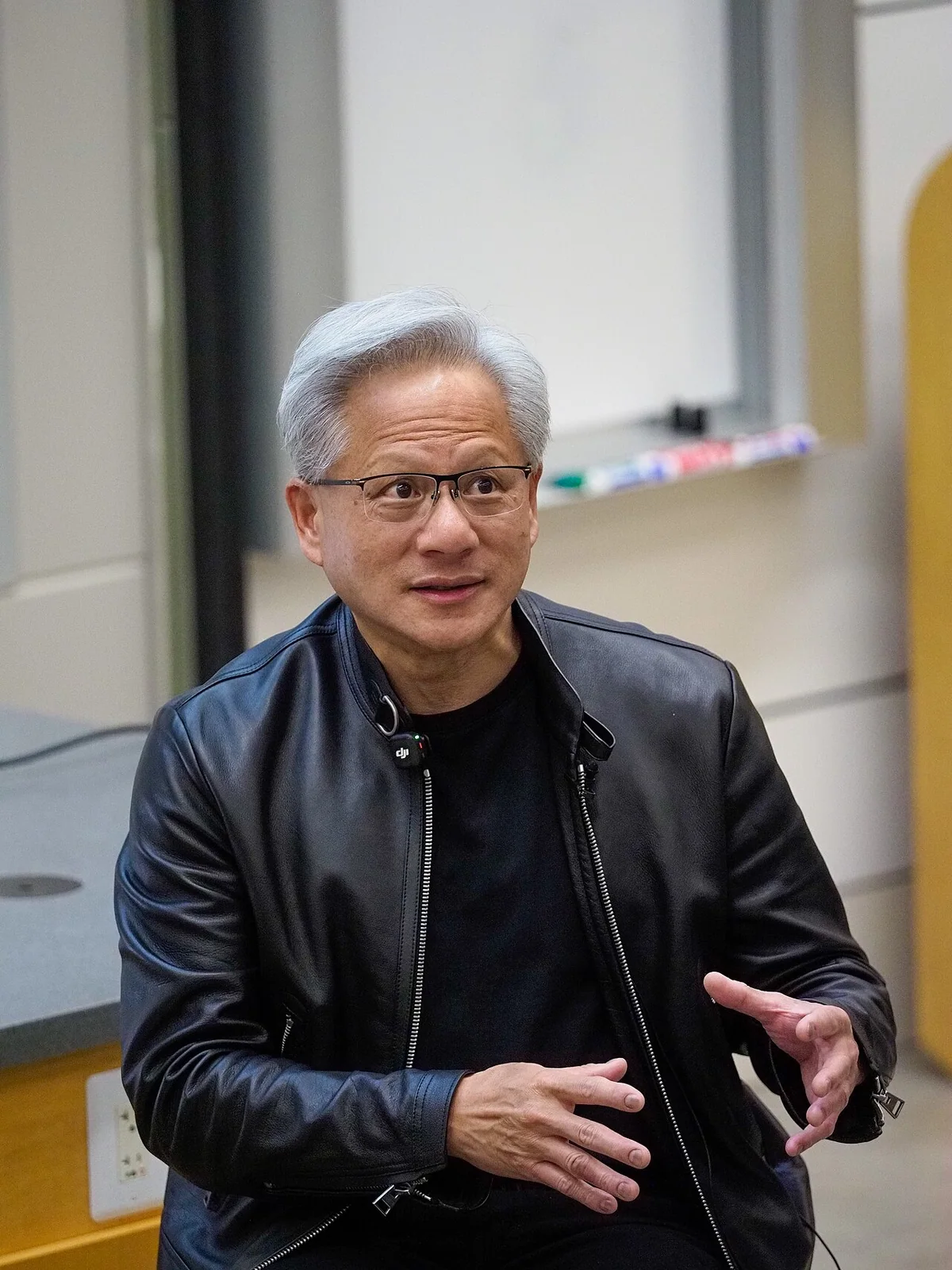

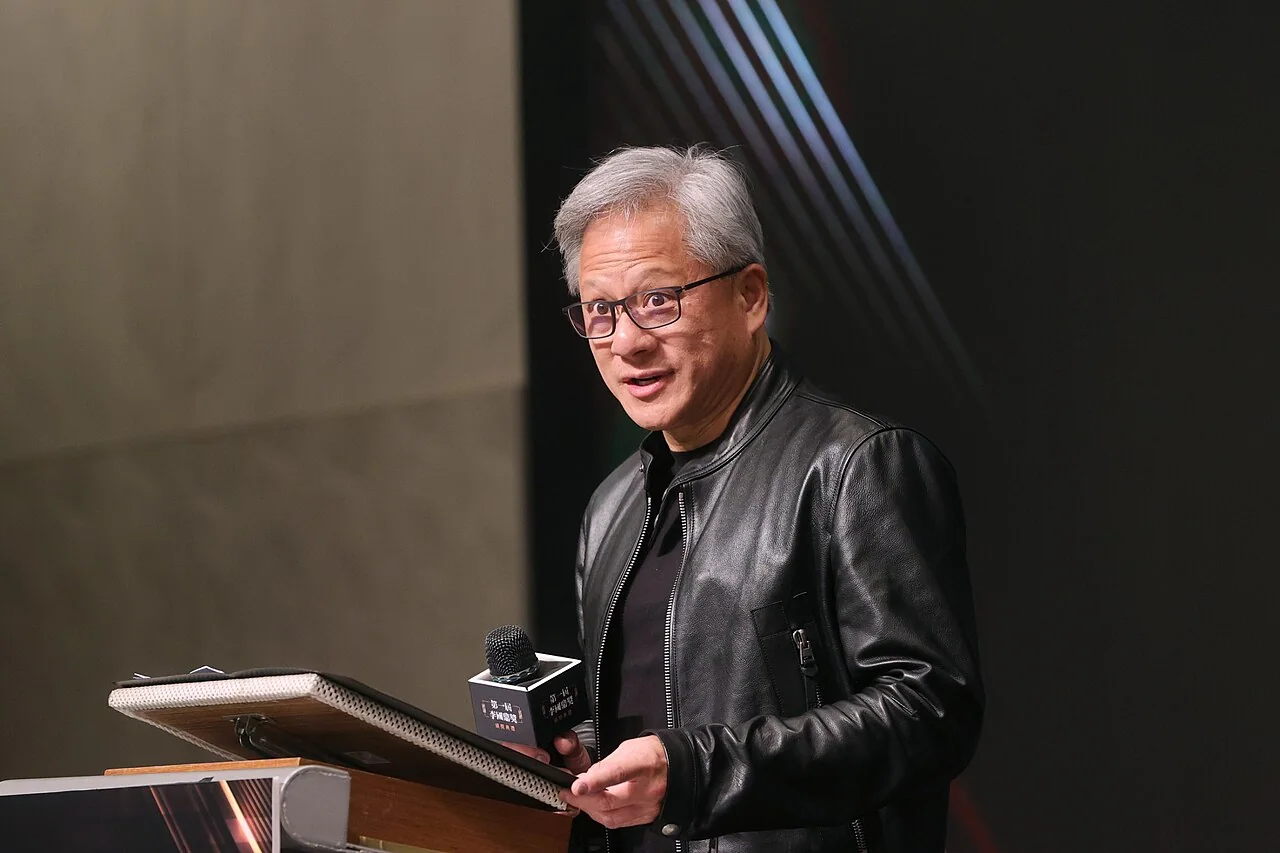
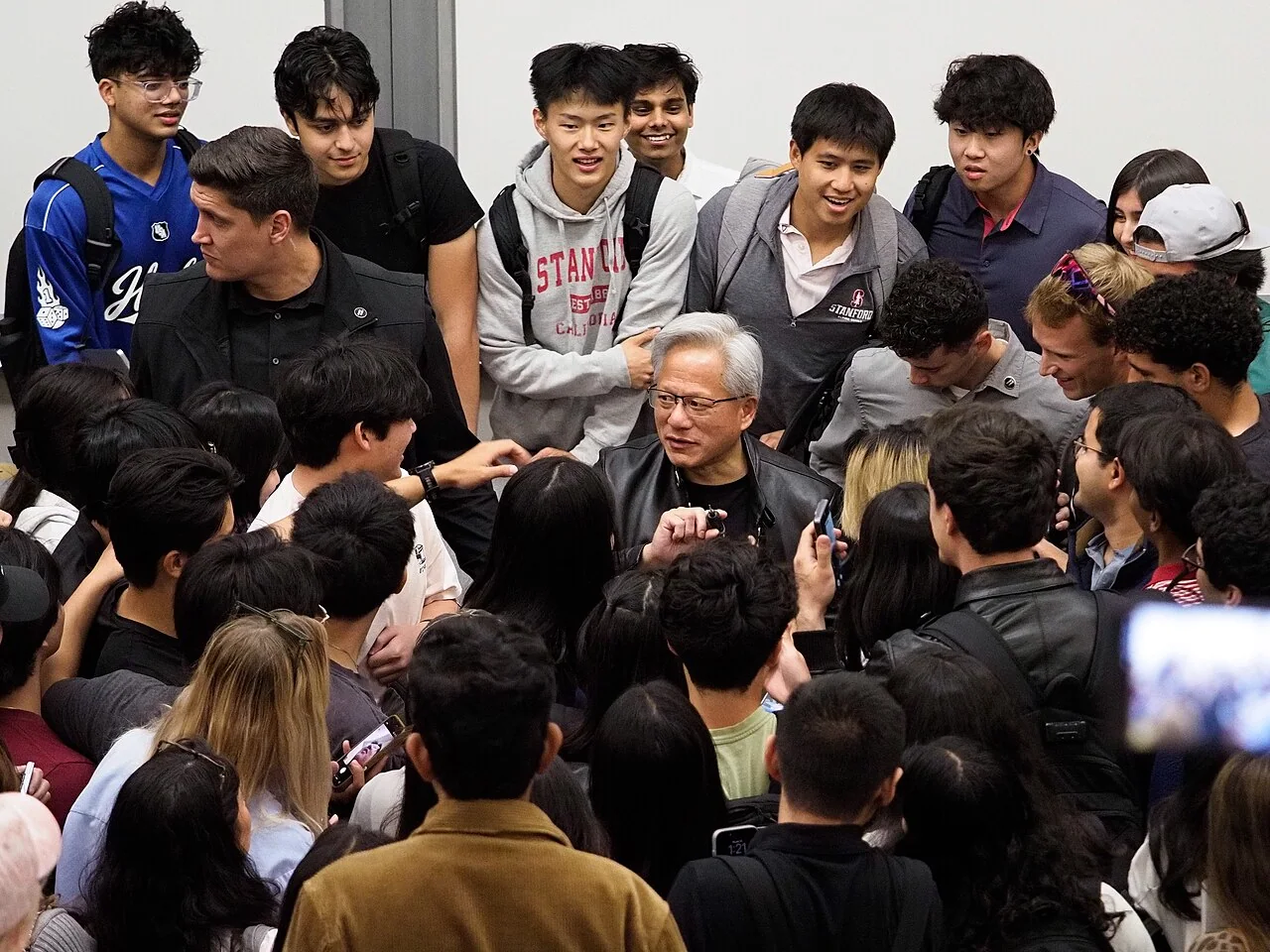
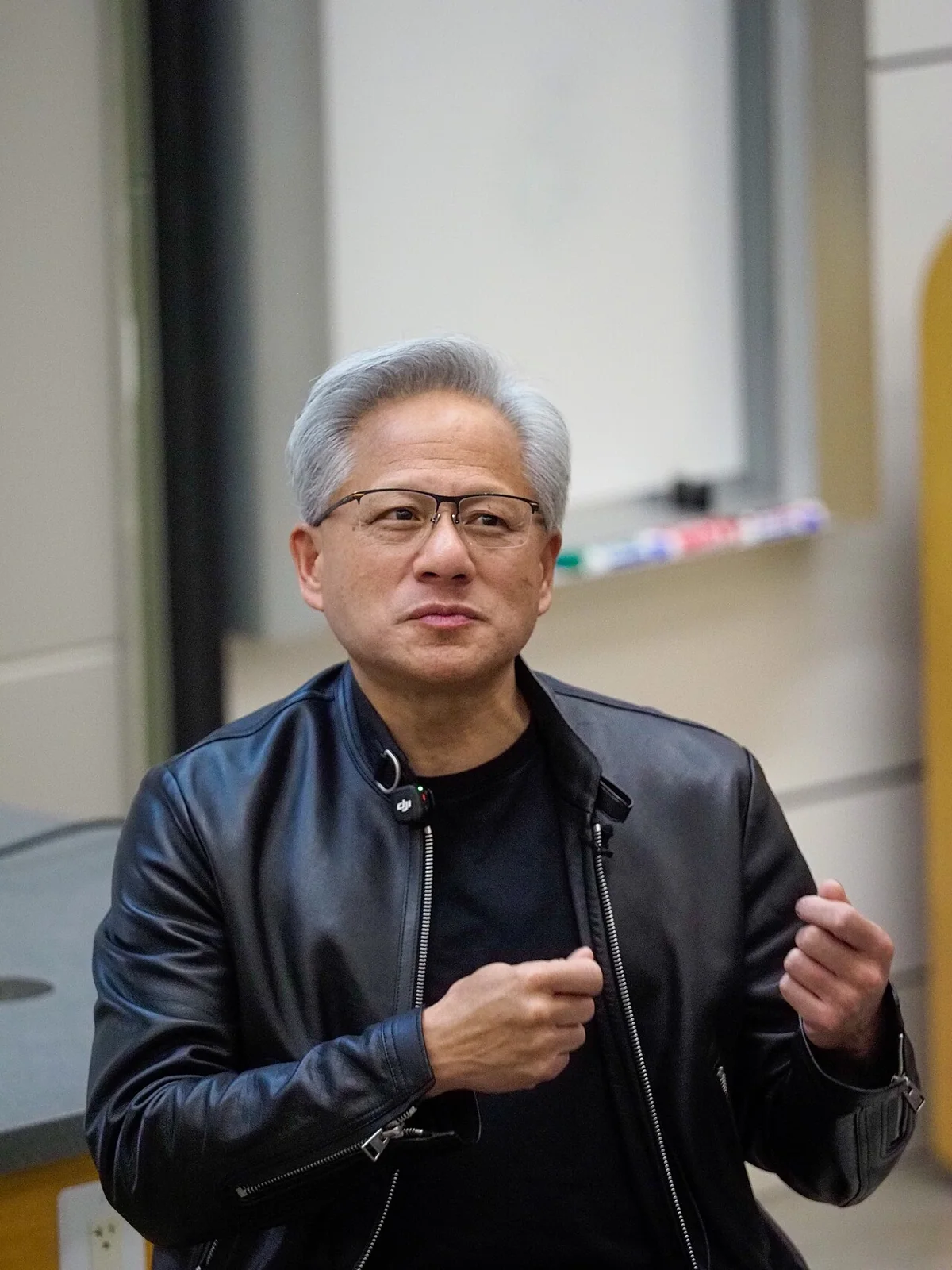


.jpg)


CONNECTED BY FIELD
Other people.
Shared territory.

Technology
Ali Abdaal
Voicepal
From Cambridge medical student to a publishing and software business, Ali Abdaal has built a career around making learning and creative work more approachable.

Technology
Anne Boden
Starling Bank
Anne Boden's founder story connects computing, banking operations and the creation of Starling, followed by a transition from its founding chief executive role.

Technology
Bill Gates
Microsoft · Gates Foundation
Bill Gates' biography connects the development of a software business with foundation work in health and development, and a public platform for sharing ideas.