
Brett Adcock
BUSINESS ASSOCIATION
Figure
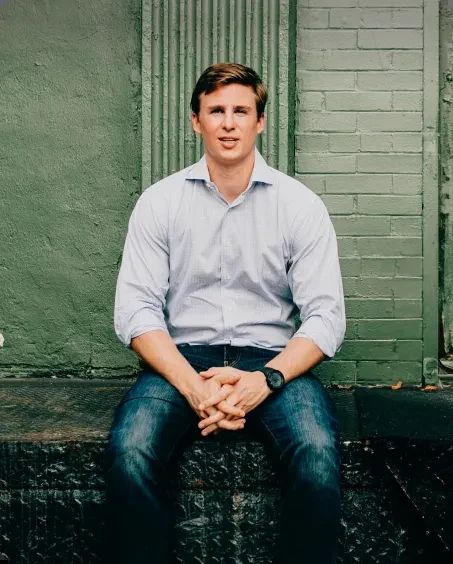
Explore Figure: company profileBrett Adcock is the founder of Figure, an entrepreneur whose work moved from a talent marketplace and electric aviation into the development of general-purpose humanoid robots.
A beginning on a family farm
Brett Adcock's official biography begins with growing up on a third-generation agricultural farm in central Illinois. He connects that background with learning to make something valuable through repeated work. The setting supplies context for a later career in which software and complex physical systems both became subjects for company building. It is part of his own account of his beginnings, rather than an explanation that makes every subsequent decision inevitable.
The businesses he went on to establish involved different markets and different kinds of product. A recruitment marketplace arranges information and matching; an aircraft must function within a physical and regulated environment; a robot must perceive and act in the world around it. That range is central to Adcock's entrepreneurial profile, with Figure representing the latest major company association examined here.
Sources [1]
Starting with the talent marketplace Vettery
Adcock's biography identifies Vettery as an early company he started in his twenties. The service matched employers with potential employees, placing a familiar organizational problem within a digital marketplace. A company needs an appropriate candidate, while a person needs a role that fits their skills and circumstances. The product's value depends on making that match more useful, rather than only collecting a large volume of names.
The same account records Vettery's acquisition by the Adecco Group in 2018. That transaction supplies a documented turning point in his career and a concrete company history before his later work in hardware. It also illustrates the difference between creating a product and developing an organization another business can acquire. The biography provides the founder's account of the event without requiring a private valuation of his subsequent ventures.
Sources [1]
Moving into electric aviation with Archer
Archer brought Adcock into a different technical and operating environment. His official biography describes founding and developing the electric-aircraft business, including work across aircraft design, software and related systems. Aviation changes the demands of company building: a compelling concept has to become a physical machine capable of demonstrating that it can operate as intended, within a demanding safety and regulatory setting.
The significance to his later career is the experience of coordinating complex engineering work. Motors, batteries, controls and the structure of an aircraft have to function together. Progress in one part does not automatically produce a finished product. That relationship between a system's components becomes relevant again in robotics, where software has to control a physical body and the body has to remain capable of carrying out the software's decisions.
Sources [1]
Founding Figure around a general-purpose robot
Adcock founded Figure in 2022, according to his own timeline. The company's stated aim is to develop general-purpose humanoid robots for work and, increasingly, the home. The ambition links advances in artificial intelligence with a physical form that can move and manipulate objects. Figure is the primary company association used for him in this collection because it provides a clear focus for that robotics work.
A humanoid introduces an unusually broad product challenge. Walking, reaching, holding an object and interpreting a request are connected actions rather than separate demonstrations to be considered in isolation. The company needs hardware and software to operate as one system. Adcock's public description of the venture places that integration at the centre, turning the general excitement around AI into a particular engineering and business project.
Successive robot generations show the development process
Figure's company history distinguishes several robot generations. It dates the first steps of Figure 01 to May 2023 and describes Figure 02 as a more refined design for real-world deployment. The published account discusses changes in hand dexterity, battery placement and the compactness of the build. Those details make development visible through specific design decisions rather than only a distant statement of ambition.
The same history presents Figure 03 with a greater emphasis on home use and a form intended to fit everyday living environments. This is the company's account of its product progression. It shows how intended settings can change the requirements of a robot: a machine introduced into a home needs to be considered through a different range of interactions from equipment operating in a controlled workplace.
Sources [2]
Software gives the physical system a task
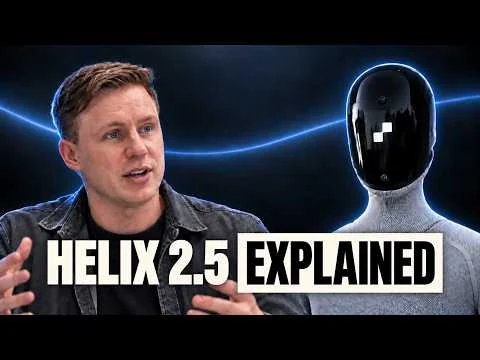
Figure's Helix material describes the AI system used to connect perception, language and learned action. The company's publications present a model intended to interpret visual information and instructions in order to control the robot. That is a different product task from generating a written answer on a screen. An instruction has to become movement in an environment where objects, distances and the consequences of an action matter.
The distinction helps explain why a robotics company needs more than an impressive-looking machine. The hardware supplies a range of possible actions, while the control system has to select and coordinate them. Figure's demonstrations and announcements are useful evidence of what the company is developing, but they remain particular demonstrations within an ongoing engineering process. The broader ambition is to make useful behaviour repeatable across changing situations.
Figure's February 2025 Helix publication illustrates the software work with two robots putting away groceries. The example connects language instructions with coordinated physical movement, making the research easier to understand through a specific task. It remains a company-published demonstration of its own system.
Commercial settings and the demands of repeatability
Adcock's official biography identifies BMW as an early commercial customer in Figure's development. That connection supplies a more concrete setting than a general claim that robots will eventually be useful everywhere. A workplace presents specific tasks and constraints against which a machine can be assessed. Repetition, reliability and the fit with existing activity become important alongside the first successful performance of an action.
This is the business step between a prototype and a product someone can depend upon. A demonstration can establish that something is possible; an operating relationship asks whether it can be supplied and used consistently. Figure's public material describes progress toward those requirements. Keeping the intended environment visible makes the company's development more understandable than treating all robot activity as equivalent evidence of a finished general-purpose system.
Other ventures reveal a wider interest in physical systems
Adcock's biography also describes Cover, a security-technology project concerned with detecting concealed weapons in places such as schools. It is a separate venture with a different product purpose from Figure. Its presence in the account shows that his interests extend beyond a single market, while maintaining a connection to systems that need to interpret the physical world and perform a useful task within it.
Those businesses should remain distinct when describing his career. Experience can move between projects through a founder, but each company has its own collaborators, product requirements and development path. Figure's company file therefore focuses on humanoid robotics, while the biography places it alongside the talent marketplace, aviation and security work that form part of Adcock's public entrepreneurial history.
Sources [1]
A company-building career with increasingly complex products
Adcock's career moves across products with very different constraints, from matching people with jobs to making machines act in the physical world. The continuity is the attempt to organize a company around a problem that requires more than one technical component. Figure makes that pattern particularly visible because the body, control system and intended environment all contribute to whether the robot is useful.
His public communication gives the work a recognizable founder identity, while the company supplies an institutional history through robot generations, partnerships and technical announcements. Together they make him a relevant addition to a collection that includes both online personalities and technology founders. The profile rests on identifiable ventures and stated product development, with Figure providing the concrete company connection behind the wider public discussion of humanoid robotics.
The evidence behind the account
Sources & further reading
The linked source material was checked on October 17, 2026. Company and creator descriptions are first-party accounts. Roles and business relationships may change. Source numbers refer to the sections above.
- brettadcock.comBio | Brett Adcock Official
- figure.aiCompany | Figure
- figure.aiFigure
- figure.aiNews | Figure
- figure.aiHelix: A Vision-Language-Action Model for Generalist Humanoid Control
IN PICTURES THE PHOTO ARCHIVE
More of Brett Adcock.
8 photographs
A closer look, beyond the biography.

CONNECTED BY FIELD
Other people.
Shared territory.
Technology
Ali Abdaal
Voicepal
From Cambridge medical student to a publishing and software business, Ali Abdaal has built a career around making learning and creative work more approachable.
Technology
Anne Boden
Starling Bank
Anne Boden's founder story connects computing, banking operations and the creation of Starling, followed by a transition from its founding chief executive role.

Technology
Bill Gates
Microsoft · Gates Foundation
Bill Gates' biography connects the development of a software business with foundation work in health and development, and a public platform for sharing ideas.